
I've run a lot of sales pages over the years, and one thing never changes: shoppers don't like being first. An empty-feeling store makes people hesitate. A store where other people are visibly buying, reviewing and browsing makes them relax and buy.
That's what social proof tools do. They take what your customers are already doing and show it to the next visitor, in small notifications and badges that sit on your product and checkout pages.
In this guide I compare the seven social proof tools I'd look at for an ecommerce store in 2027. I'll be upfront: Converti is our own product at Teknikforce, and it's the one I recommend. But I've also laid out the real prices and limits of the alternatives, taken from their own pricing pages, so you can decide for yourself.
What is a social proof tool?
A social proof tool is a script you add to your website that displays evidence of other people's activity. The most common formats are:
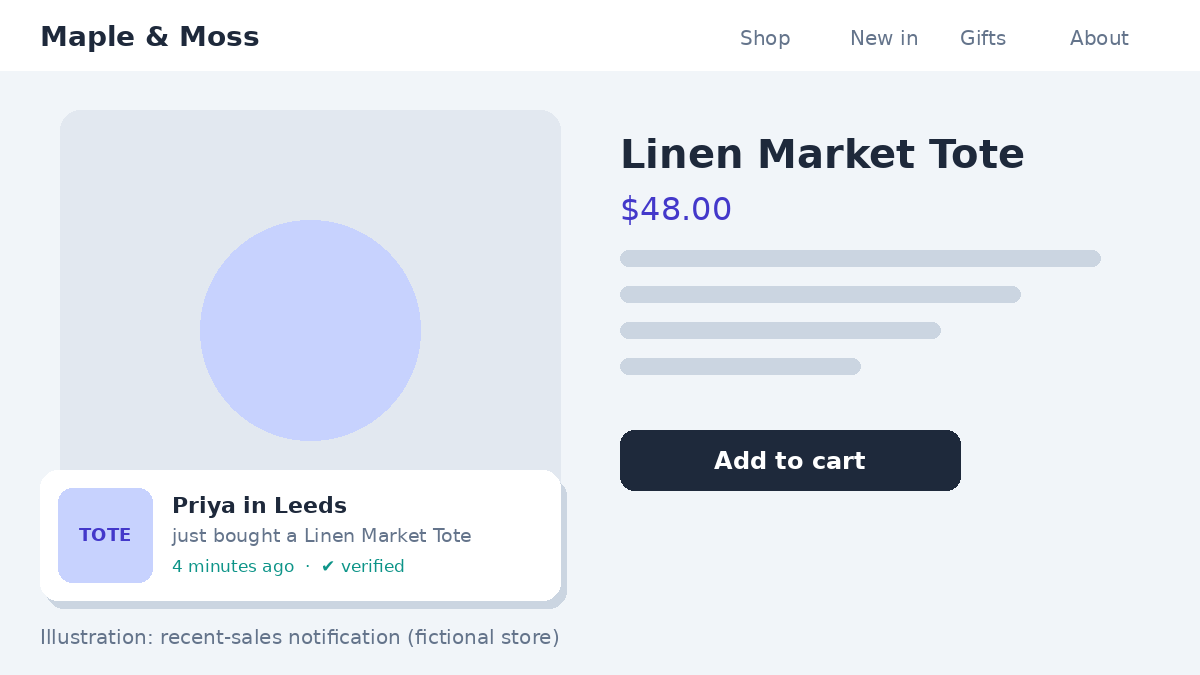
- Recent sales notifications ("Priya in Leeds just bought a Linen Market Tote")
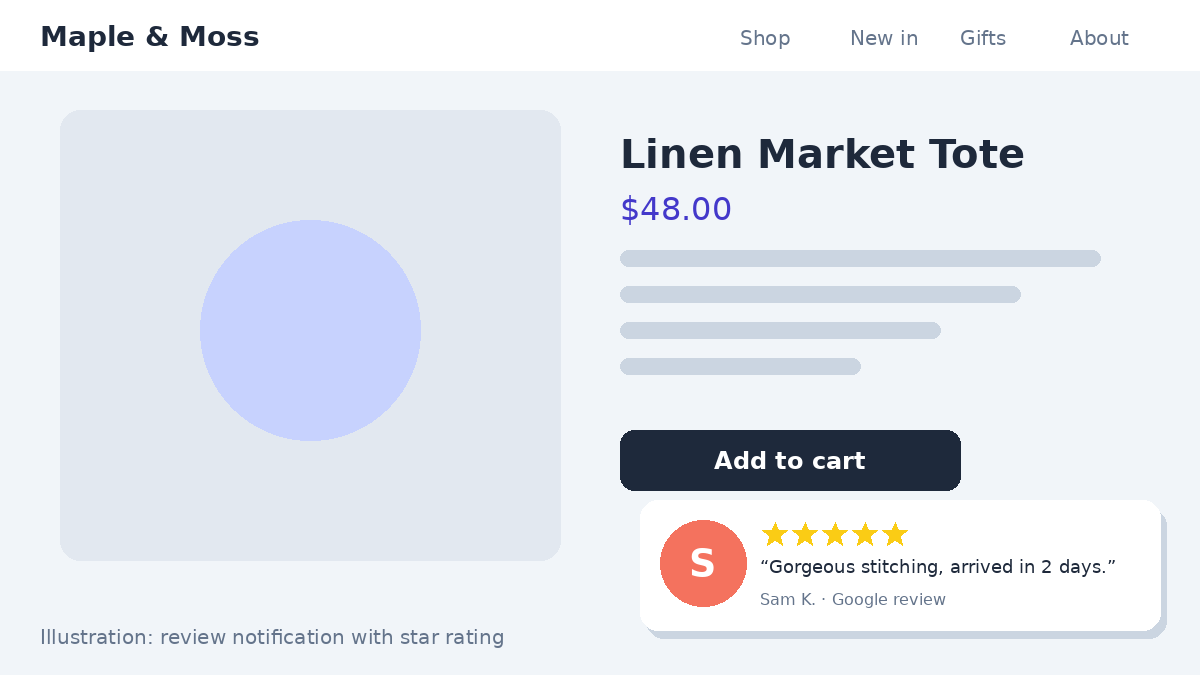
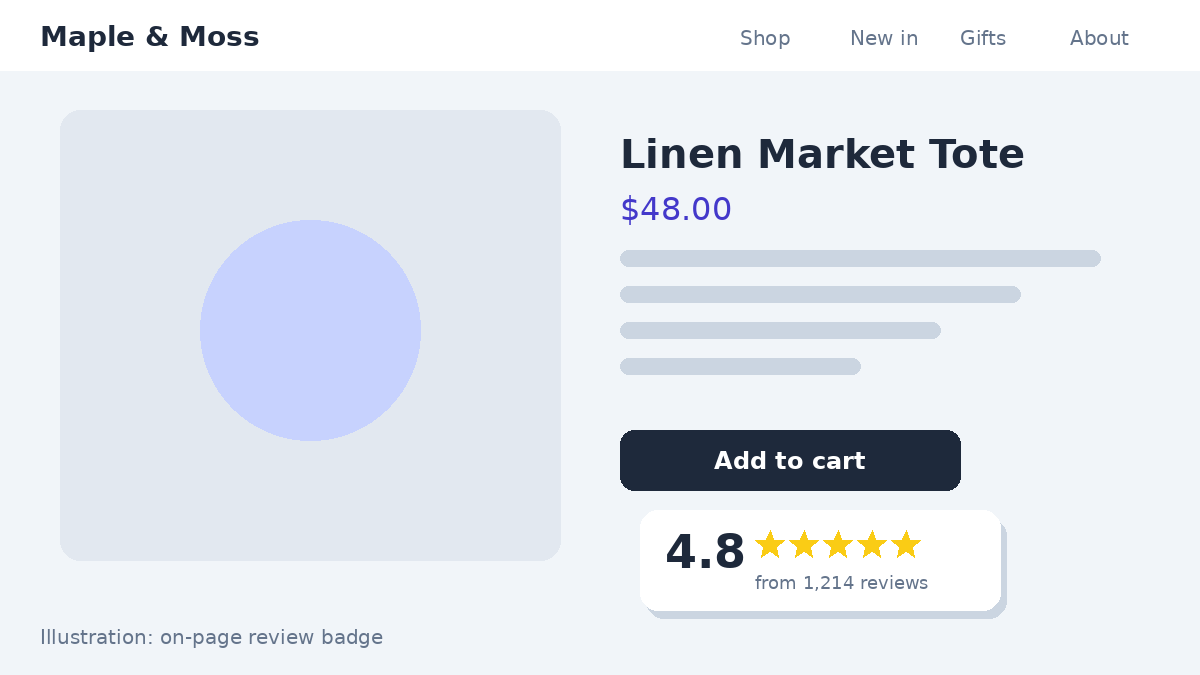
- Review pop-ups and badges with star ratings
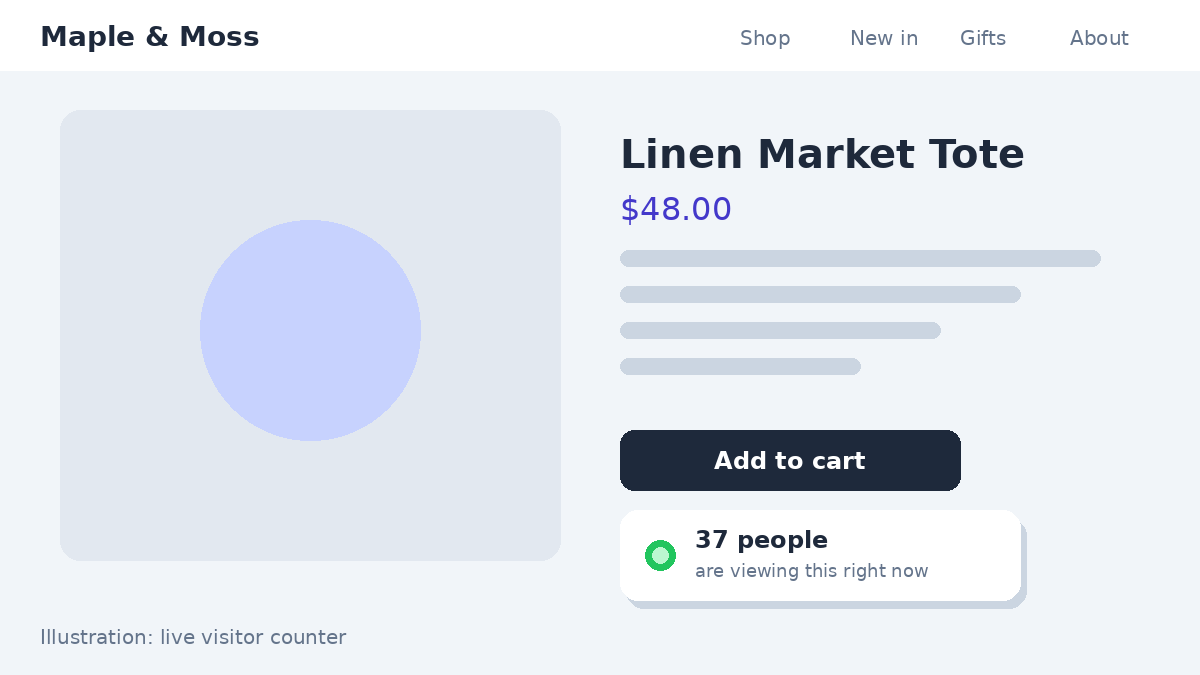
- Live visitor counters ("37 people are viewing this right now")
- Conversion counters ("1,482 people signed up this week")
Many tools now add urgency and offer widgets too, such as countdown timers, coupons and free-shipping bars, because proof and urgency work best together.
Quick comparison: the 7 best social proof tools for 2027
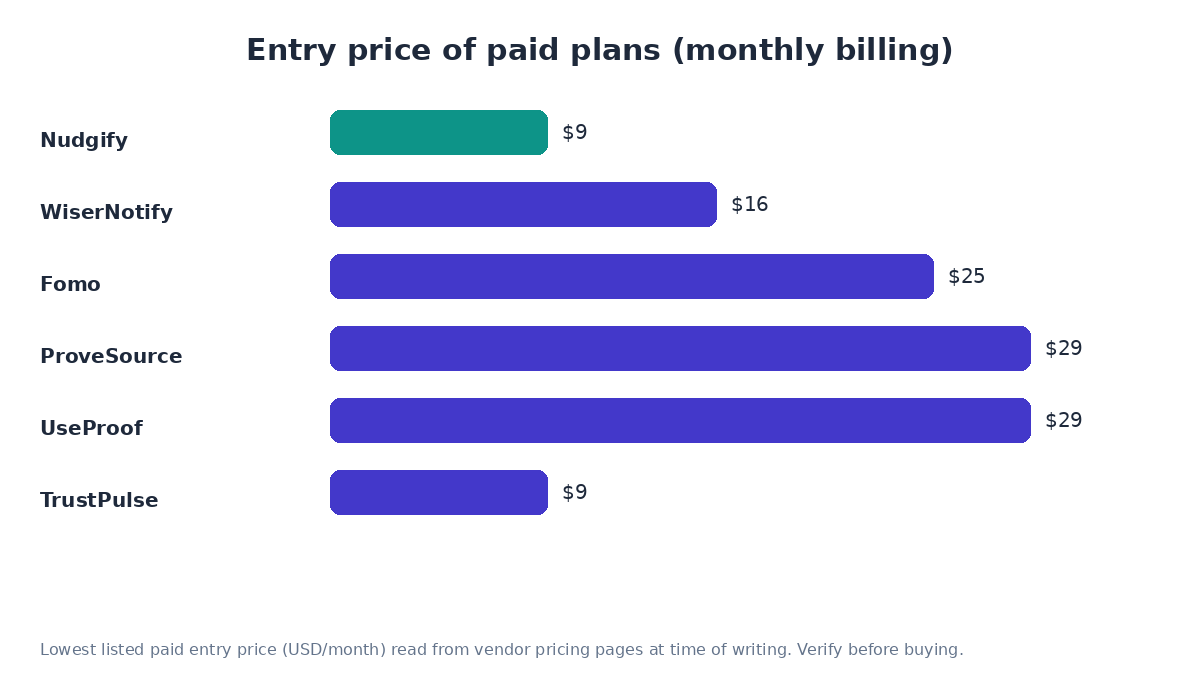
Prices below are the lowest published paid plans I could read on each vendor's own pricing page at the time of writing. Vendors change prices often, so check before you buy.
| Tool | Starting paid price | Widget types | Integrations | Free plan |
|---|---|---|---|---|
| Converti (our pick) | From $6.99/mo or $67/yr (getconverti.xyz) | 39 widgets: sales, reviews, counters, visitors, timers, coupons, free shipping, scratch card, opt-ins, feedback, chat buttons, cookie notice and more | Any site that loads a JS snippet (WordPress, Shopify, page and funnel builders); Google Business reviews; CSV import; webhooks (Pro) | No (30-day money-back guarantee) |
| Fomo | $25/mo (Starter, 8,000 notifications) | Sales, add-to-cart, visitors, reviews, low stock | 100+ apps, including Klaviyo, Mailchimp, Google Analytics, webhooks | Shopify only (1,000 notifications/mo) |
| ProveSource | $29/mo, or $24/mo billed yearly (20K visitors) | Sales and sign-up pop-ups, reviews, visitor count; separate "Boost" widgets product | Shopify, Wix and others | Yes (1K monthly visitors) |
| TrustPulse | $5/mo billed yearly (Basic, normally $9/mo) | Recent activity, visitor counts, action messages | WordPress, Shopify, WooCommerce, BigCommerce, Squarespace and more | Not listed |
| UseProof (Pulse) | $29/mo, or $24/mo billed yearly | Live and recent activity notifications | Unlimited domains on one account | No (14-day free trial) |
| Nudgify | $9/mo (Lite) | Proof, FOMO, urgency and friction "nudges", reviews | Major site platforms; Google, Trustpilot reviews | Yes (limited) |
| WiserNotify | $59/year (Basic, 5K visitors, yearly only); Pro $16/mo | Sales, reviews, visitors, inline proof (higher plans) | 200+ integrations, incl. Shopify, WooCommerce, Wix | No (7-day free trial) |
How I compared these tools
I looked at four things that actually matter for a store owner:
- Range of widgets. Can one tool cover proof, urgency and lead capture, or will you need three more apps?
- Where the data comes from. Real orders and reviews convert. Made-up numbers erode trust.
- Pricing model. Some tools charge per notification, some per visitor, some per widget view. That changes what you really pay.
- Ease of setup. One script and a dashboard beats a developer ticket.
1. Converti: best all-in-one social proof and conversion toolkit
I built Converti with my team at Teknikforce because I was tired of stacking single-purpose plugins on our own sales sites. It's one lightweight script that gives you 39 widgets managed from one dashboard, and we use it on all of our own sales sites.
What you get
- Social proof: recent sales notifications with a "verified by Converti" badge, review notifications, a conversions counter, live visitors and visitors-in-a-period counters.
- Real data sources: Converti detects purchases and sign-ups on your site automatically, pulls reviews from your Google Business profile, and lets you import past orders and reviews by CSV, so a new store doesn't start with a blank slate.
- Urgency and offers: call to action with a deadline timer, countdown bar, coupon, coupon bar, free-shipping notice and a scratch card.
- Lead capture and feedback: newsletter pop-ups, an email collector, a phone number collector, modal collectors, and emoji, score and text feedback.
- Messaging: an all-in-one chat button plus single-platform buttons for WhatsApp, Facebook Messenger, Telegram, Viber and Discord.
- Extras: information bars, link button bars, image slide-ins, video overlays, social share prompts and a cookie notice.
Widgets are responsive and load asynchronously, so they don't hold up your page. You can run several notifications on one page, set a custom delay for each, and see per-widget analytics with CSV export.
Plans
There are two plans. Elite covers 1 website, 8,000 widget views a month and 10 widgets, with Converti branding shown and no webhooks. Pro covers 5 websites, 50,000 widget views a month and unlimited widgets, with a commercial licence, branding removal and webhooks. Every plan includes all widget types, free upgrades and live chat support 24 hours a day, 6 days a week, plus a 30-day money-back guarantee. Elite starts at $6.99 a month or $67 a year, and Pro is $9.99 a month or $97 a year.
Pros
- 39 widgets in one script, covering proof, urgency, lead capture and chat
- Real data: automatic conversion detection, Google reviews, CSV import
- Works on any platform that accepts a JavaScript snippet
- Live chat support 24/6, plus hands-on setup help over TeamViewer or UltraViewer
Cons
- No free plan (the 30-day money-back guarantee works as the trial)
- Elite is limited to 10 widgets and shows Converti branding
- Webhooks are Pro-only
Best for: store owners who want proof, urgency and lead capture from one tool without paying for three subscriptions.
Try Converti on your store →
2. Fomo: best for stores with lots of integrations
Fomo is one of the best-known names in sales notifications. One thing to note for 2027: the old fomo.com domain now points to an unrelated crypto app, and the social proof product is sold at usefomo.com and on the Shopify App Store.
Fomo shows recent purchases, add-to-cart events, product page visits, reviews and low-stock alerts, and connects to 100+ apps including Klaviyo, Mailchimp and Google Analytics. Pricing is by notifications: Starter is $25/month for 8,000 notifications on 1 website, Business is $75/month for 40,000, and Pro is $149/month for 300,000. There is a free plan for Shopify stores only (1,000 notifications a month) and a 14-day trial on paid plans.
Pros: huge integration list; inline (on-page) social proof on Business and up; multi-language support. Cons: per-notification pricing climbs fast on busy stores; inline proof isn't on Starter; automatic plan upgrades are on by default when you exceed your limit.
3. ProveSource: best free plan for small stores
ProveSource (now at provesrc.com) charges by monthly unique visitors rather than notifications. The free plan covers 1,000 monthly visitors with all core features and ProveSource branding. Starter is $29/month, or $24/month billed yearly, for 20,000 visitors; Growth is $54/month, or $45 billed yearly, for 50,000.
It also sells a separate product, ProveSource Boost, with pop-ups, spin-to-win, bars, countdowns and WhatsApp buttons, which has its own free plan and a $24/month Pro tier. It's not included in the social proof plans.
Pros: a genuinely usable free plan; unlimited impressions; visitor-based pricing is predictable. Cons: conversion widgets are a separate subscription; branding stays on the free plan.
4. TrustPulse: best budget pick for WordPress sites
TrustPulse, from the team behind OptinMonster, focuses on recent-activity notifications and "on fire" visitor counts. Its pricing page lists Basic at $5/month billed yearly (normally $9/month), Plus at $10/month (normally $17), Pro at $19/month (normally $34) and Growth at $39/month (normally $50).
Pros: low entry price on annual billing; simple setup. Cons: the lowest prices need annual billing; a narrower widget set than an all-in-one toolkit; no free plan listed on the pricing page.
5. UseProof: best for SaaS and lead-gen sites
UseProof's "Pulse" social proof notifications start at $29/month, or $24/month billed annually, for 1,000 unique visitors, with unlimited domains and unlimited notifications on one account and a 14-day free trial. Its bigger focus now is website personalization, sold separately from $599/month.
Pros: unlimited domains and notifications; strong for B2B sign-up flows. Cons: 1,000 visitors on the entry plan is tight for a store; the company's main focus has shifted to personalization.
6. Nudgify: best low-cost plan with review integrations
Nudgify groups its widgets into proof, FOMO, urgency and friction "nudges". It can show reviews from Google Places and Trustpilot and translate nudges automatically into 32 languages. Lite is $9/month ($90/year), Plus $29, Genius $49 and Agency $89. There's a limited free plan, a 7-day free trial on monthly plans, and lifetime deals (non-refundable).
Pros: cheap entry plan; review imports from several sources; multilingual. Cons: limits on the free plan; lifetime plans can't be refunded.
7. WiserNotify: best yearly-budget option
WiserNotify prices by monthly traffic. Basic is $59 a year for 5,000 visitors a month (yearly only), Pro starts at $16/month for 10,000 visitors, and a higher tier starts at $65/month for 100,000 visitors and adds inline social proof messages. Every plan starts with a 7-day free trial.
Pros: very low yearly price for small sites; inline proof on higher plans. Cons: limited templates on Basic; you'll need extra tools for coupons, chat and opt-ins.
Which social proof widgets should a store start with?
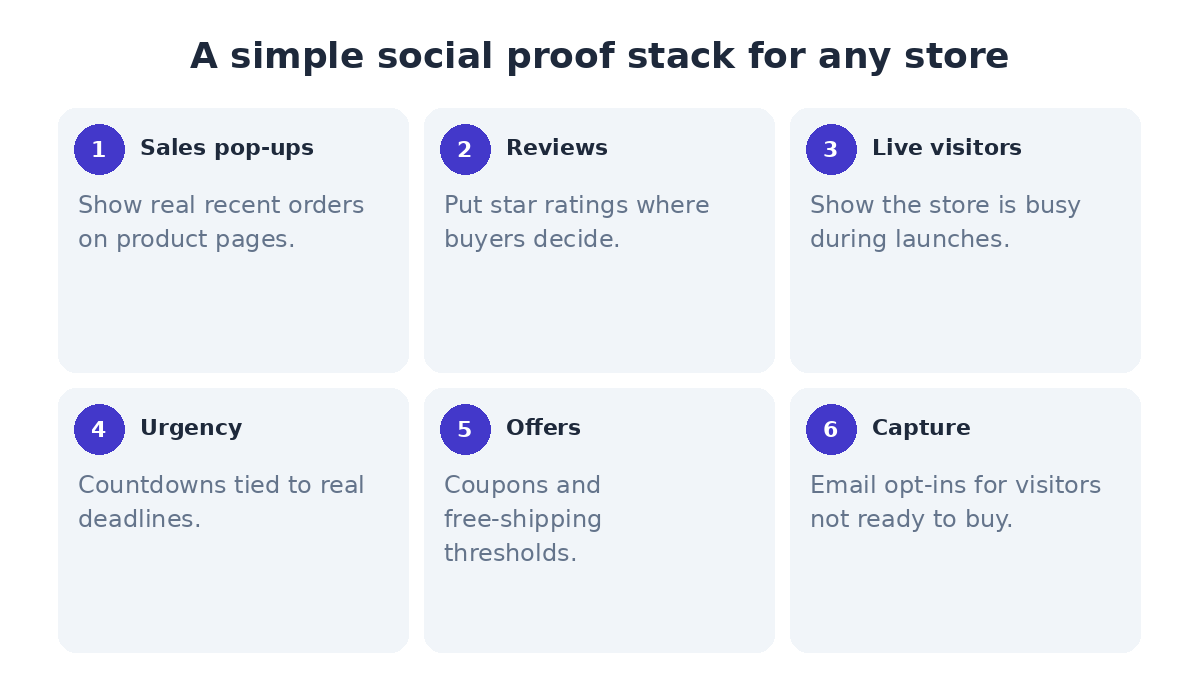
If you're starting from zero, this is the order I'd add them in:
- Recent sales pop-ups on product pages. The single biggest trust signal for a new visitor.
- Review notifications or badges close to the Add to Cart button.
- A live visitor counter during launches and sales.
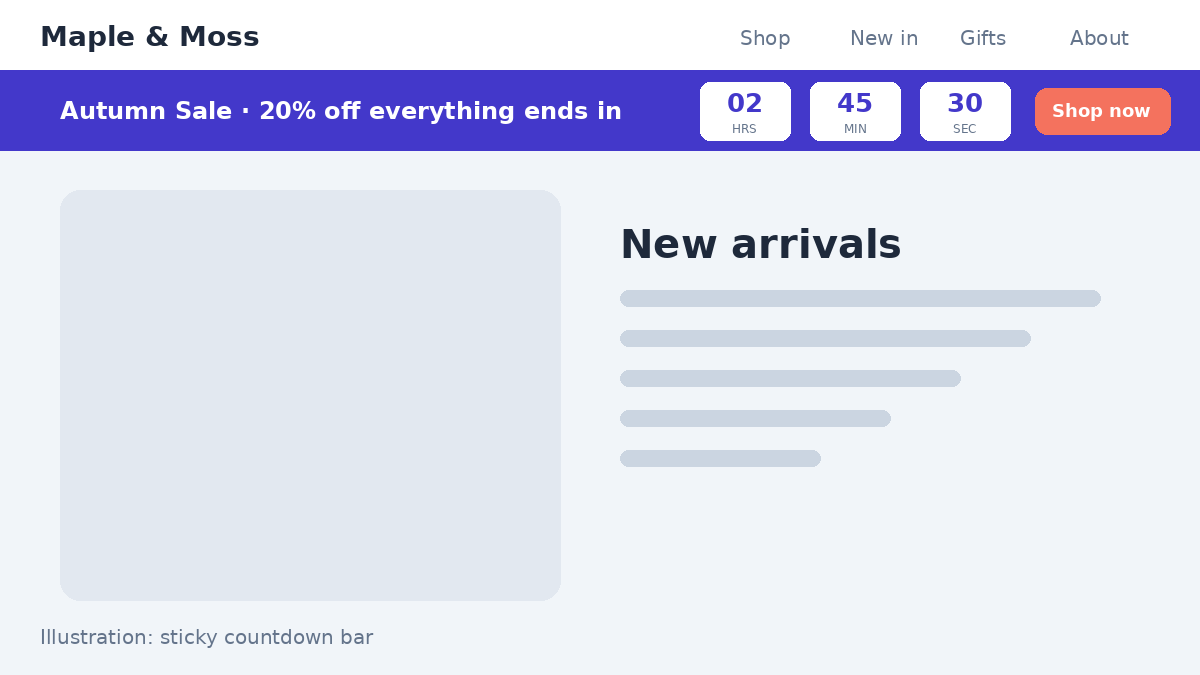
- A countdown bar tied to a real deadline. Fake timers that reset on refresh destroy trust.
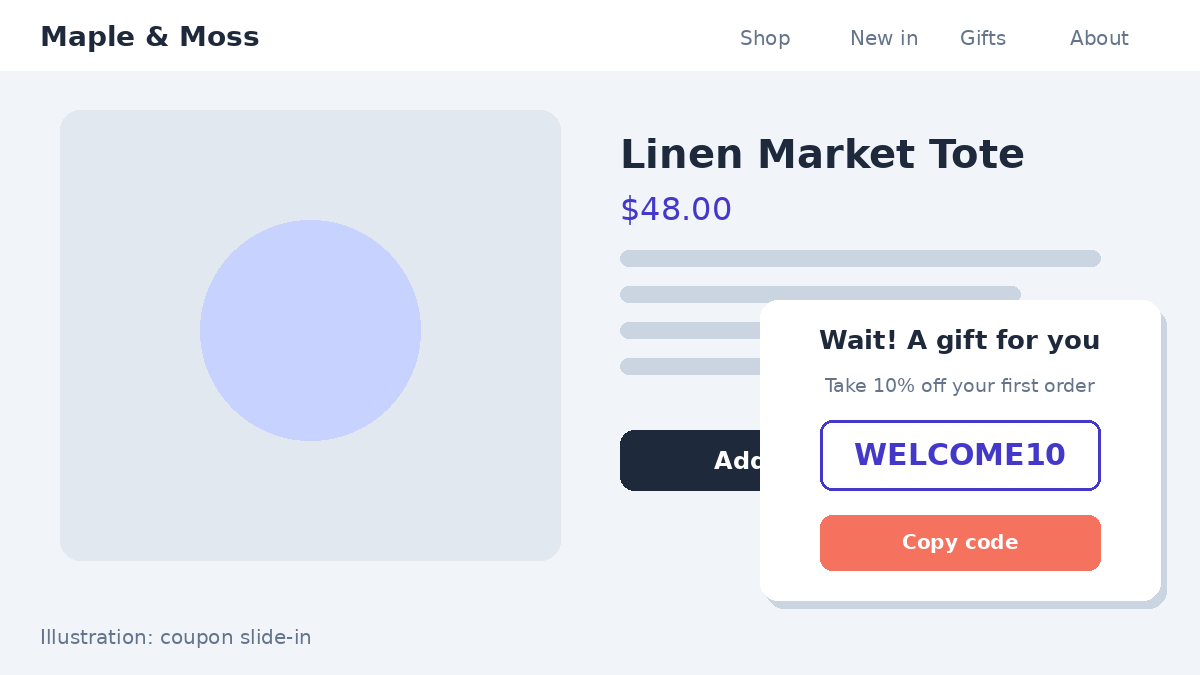
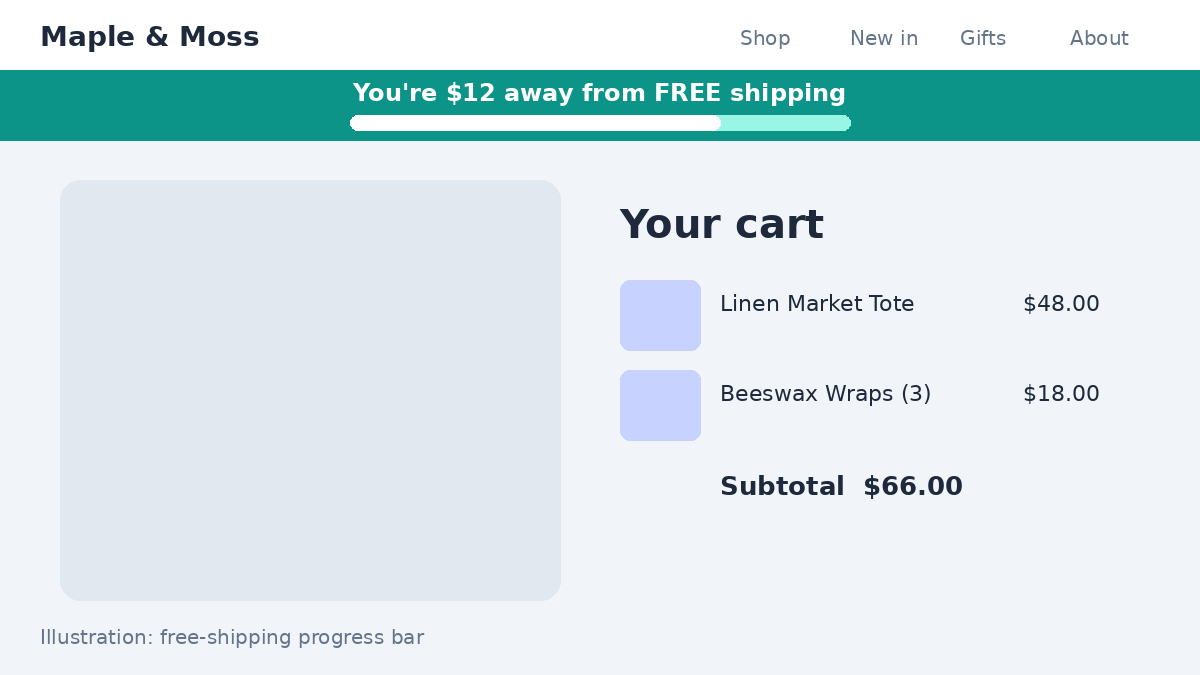
- A coupon or free-shipping bar to close hesitant buyers.
- An email collector for visitors who aren't ready to buy yet.
With most of the tools above you'd stop at step 3 and add more apps. With Converti, all six run from the same script.
Best practices for social proof in 2027
- Use real data only. Imported orders, live conversions and real reviews. Shoppers spot fakes, and in many markets fake reviews can break consumer-protection rules.
- Don't flood the page. Space notifications out with delays. One every 10 to 20 seconds is plenty.
- Match placement to intent. Sales pop-ups on product pages, a free-shipping bar in the cart, opt-ins on the blog.
- Watch mobile. Keep notifications small and easy to close on phones.
- Measure. Use per-widget analytics and drop anything that doesn't pull its weight.
FAQ
What is the best social proof tool for ecommerce in 2027?
For most stores I recommend Converti, because one script covers sales pop-ups, reviews, visitor counters, urgency timers, coupons, opt-ins and chat buttons. If you only need sales notifications and want a free plan, ProveSource is also worth a look.
Do social proof pop-ups slow down a website?
They can if they're poorly built. Converti loads its widgets asynchronously, so they don't hold up the rest of the page. Whatever you use, test your page speed before and after.
Is there a free social proof tool?
Yes. ProveSource has a free plan for 1,000 monthly visitors, Nudgify has a limited free plan, and Fomo has a free plan for Shopify stores only. Converti has no free plan but offers a 30-day money-back guarantee.
Can I show Google reviews in social proof notifications?
Yes. Converti pulls reviews from your Google Business profile automatically, and Fomo and Nudgify also support Google reviews.
Are fake sales notifications legal?
I'd never use them. Showing purchases or reviews that didn't happen misleads customers, and in many countries it can break consumer-protection law. Stick to real orders and reviews.
Does Converti work on Shopify and WordPress?
Yes. If your site can load a JavaScript snippet, it can run Converti. That includes WordPress, Shopify, page builders, funnel builders and hand-coded sites.
How many social proof widgets should I run at once?
Start with two or three on your key pages, such as a sales pop-up, a review badge and a free-shipping bar. Add more only when your analytics show they help.
Conclusion
Every tool on this list will put social proof on your store. The difference is how much else you'll need to buy. Fomo, ProveSource, TrustPulse, UseProof, Nudgify and WiserNotify are solid notification tools. Converti gives you notifications plus reviews, urgency, offers, opt-ins and chat in one script, with one dashboard to manage.
If you want every visitor you've paid for to see that real people buy from you, start with Converti. It comes with a 30-day money-back guarantee, so you can test it on your own store first.